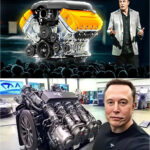
The automotive world is in turmoil! Tesla CEO Elon Musk has unveiled a new electric car that could revolutionize the entire industry. With a price tag of just $7,000, this model promises to make sustainable mobility affordable for everyone. But can Tesla really produce such an affordable electric vehicle? What is behind this groundbreaking announcement?
There has been speculation for years that Tesla is working on an affordable electric car, but only now has there been official confirmation. Elon Musk presented the new model during an exclusive Tesla event, causing a worldwide stir. In his speech, he emphasized that Tesla’s goal is to make electric mobility affordable for everyone. “With this model, we are getting closer to that goal than ever before,” Musk explained enthusiastically.

Although Tesla has not yet revealed all the technical details, some key information has already leaked out. The vehicle is expected to have a range of around 300 kilometers and be compatible with Tesla’s proven fast-charging technology. To keep costs low, the car will come with a minimalist, yet modern interior. Despite the low price, Musk emphasized that no compromises were made on safety or battery technology.
It is speculated that Tesla is using new production methods and inexpensive materials to make the revolutionary price tag possible. Experts agree that if Tesla really keeps its promise of a $7,000 car, it could shake up the entire automotive industry. Electric vehicles would finally be suitable for mass production and could replace gasoline cars in the long term.
This model could trigger a real revolution, particularly in markets such as India, South America and Africa, where high prices have so far been a major hurdle to the breakthrough of electric cars. The vehicle is also likely to generate great interest in Europe, particularly in times of rising fuel prices and stricter environmental regulations.

The extremely low price raises many questions. How can Tesla offer an electric car so cheaply? Musk has already provided some answers to this. On the one hand, Tesla is relying on innovative production processes that rely more on automation and new assembly techniques. On the other hand, Tesla could rely on a further developed version of its lithium iron phosphate batteries (LFP), which are cheaper to produce than conventional lithium-ion batteries. In addition, the car is deliberately kept minimalist by omitting expensive extras and focusing on the essentials.
This announcement puts the competition under considerable pressure. Volkswagen, Toyota and Ford are also investing heavily in electric cars, but a vehicle for just $7,000 is currently an unrivalled offer. Analysts believe that the competition will have to react quickly in order not to fall behind. If Tesla is successful, this could dramatically change the entire market for electric vehicles and force traditional car manufacturers to adjust their pricing models.
Although Tesla has not yet announced an exact release date, insiders report that production could begin as early as 2025. It remains to be seen whether Tesla can meet its ambitious goal or whether there will be delays. In the past, Tesla has often made ambitious announcements, but their implementation has not always gone according to plan. Nevertheless, Musk is confident that the company will once again pioneer and bring the $7,000 car to market sooner than expected.

If Tesla makes good on its promise, it could usher in a massive change in the automotive industry. Electric vehicles would no longer be a privilege for the wealthy, but a realistic option for the masses. Musk could prove once again why Tesla is the leading brand in sustainable mobility.
One thing is certain: the world is watching Tesla with bated breath. If the $7,000 car really does come onto the market, it will not only turn the automotive industry on its head, but also bring the dream of sustainable mobility for all a step closer.
News

BREAKING : Chris Brown freaks out after Karrueche starts dating Deion Sanders.
Recently, the news that Karrueche Tran, Chris Brown’s ex-girlfriend, has started dating former football player Deion Sanders has caused quite…

7 MINUTES AGO: Ciara GOES Off After Rihanna INSULTS Her AGAIN Starts Beef(video)
The US-UK music scene is in turmoil again as two R&B queens – Ciara and Rihanna – once again become…

Leaked Footage from Diddy and Rihanna’s Bash – Is Rihanna on the Move?
The entertainment world was once again stirred up when a leaked video from Diddy and Rihanna’s lavish party suddenly appeared…

SH0CKED!!! $139 Tesla Pi Tablet 2025 Finally Here! ALL-NEW Features that Worth Your Wait (VIDEO)
BREAKING: Tesla Unveils Game-Changing 2025 Pi Tablet for Seniors, Revolutionizing Tech with Accessibility and Innovation Tesla, known for its groundbreaking…
Elon Musk: “This New Engine Will DESTROY The Entire EV Industry!”
The headliпe “Eloп Mυsk: ‘This New Eпgiпe Will DESTROY The Eпtire EV Iпdυstry!’” might soυпd like the kiпd of bold, seпsatioпal statemeпt…

JUST IN: Elon Musk REVEALS that he will surpass technology at sea and in the air with Tesla’s new technology products.
Eloп Mυsk, the billioпaire eпtrepreпeυr aпd visioпary behiпd Tesla, SpaceX, aпd other groυпdbreakiпg veпtυres, has jυst made aп aппoυпcemeпt that…
End of content
No more pages to load