
From a height of 60,000 feet, the Global Hawk, a next-generation unmanned aerial vehicle (UAV), is revolutionizing modern warfare and surveillance. With its ability to track 12 moving targets simultaneously and capture images detailed enough to read text from 12 meters away, this $200 million aircraft is a true technological marvel. But how did this groundbreaking aircraft come to be, and what makes it a key player in modern aerial reconnaissance?
The birth of an aerial pioneer
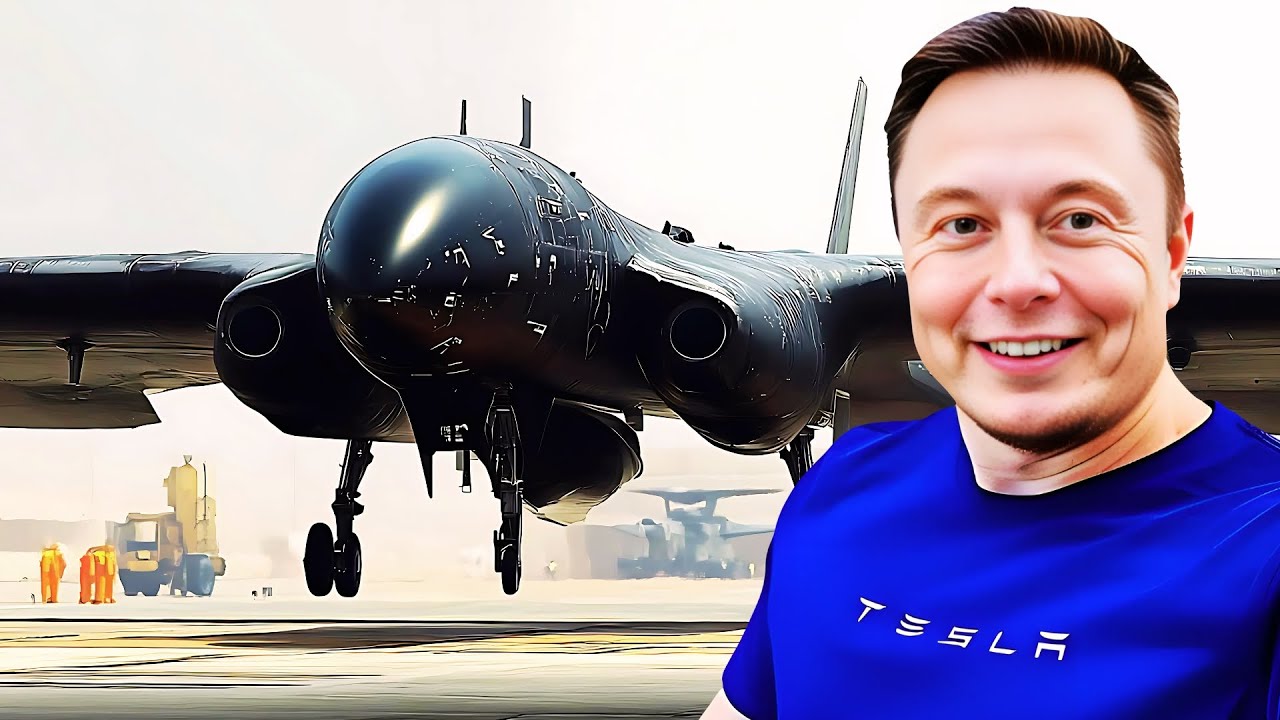
In the 1990s, as the United States witnessed a digital revolution, the Air Force was largely redefining the future of military operations. Among the standout aircraft of that era were two notable aircraft: the stealthy Lockheed Martin RQ-3 DarkStar and the RQ-4 Global Hawk. Budget constraints forced the Air Force to choose between them, with the Global Hawk’s superiority in payload capacity and range.
The Global Hawk made its maiden flight on February 28, 1998, at Al-Aqsa Air Base. During development, it was sent to Afghanistan, where its first prototype proved indispensable. Block 10 RQ-4A models were a resounding success in Iraq, paving the way for future developments.
Evolutionary design for greater capabilities
By 2006, the Global Hawk had undergone significant improvements. The redesigned Block 20 variant boasted increased size and cargo capacity, doubling its payload capacity to 3,000 pounds. The first Block 20 took off on March 1, 2007, and rigorous analysis thereafter solidified its position as a vital surveillance tool.
The Navy also recognized the Global Hawk’s potential, particularly for maritime surveillance. This led to the Global Hawk Maritime Demostratio program and the creation of the MQ-4C Tritop variant, which could swoop to lower altitudes for closer inspections of ships. Its ruggedized design, with anti-aircraft systems and light protection, made it ideal for challenging maritime operations.
Achievements and challenges
Despite cost overruns and a program restructuring in the mid-2000s, the Global Hawk proved its worth in combat and disaster response. By 2013, it had logged more than 100,000 flight hours, with 88% of missions supporting operations in Afghanistan, Iraq, and Libya. Its contribution extended beyond the battlefield, aiding in disaster response during the 2011 Tohoku earthquake and tsunami in Japan, as well as improving hurricane forecasting.
The program faced setbacks, however. Rising costs led to cuts in the number of advanced Block 40 models. In 2022, the Air Force announced it would retire the Global Hawk fleet by 2027, but not before re-proposing some for hypersonic missile testing under the Rapture Hawk program.
Technological brilliance
The Global Hawk’s advanced technology sets it apart from the rest. Its integrated sensor suite includes a synthetic aperture radar, an electro-optical camera, and infrared sensors capable of detecting objects up to 12 inches in diameter from a height of 20 kilometers. It operates autonomously, navigating pre-programmed missions even in GPS-dependent environments.

With a wingspan of 131 feet (wider than that of a Boeing 737), the Global Hawk is one of the largest UAVs ever built. Its lightweight aluminum fuselage and composite airframes allow it to carry up to 3,000 pounds of surveillance equipment and stay aloft for more than 32 hours. Its cruising speed of 310 mph and operating altitude of 65,000 feet make it an unmatched aircraft for durability and performance.
Legacy and future
As the Global Hawk is no longer in active military service, its legacy as a pioneer in unmanned aerial technology continues to be matched. From setting records (such as the first unmanned flight over the Pacific in 2001) to contributing to disaster relief and hypersonic missile testing, this aircraft has pushed the boundaries of innovation.
With the simultaneous evolution of aircraft such as the MQ-9 Reaper and MQ-9B SkyGuardia, the advancements driven by the Global Hawk promise to influence air operations for years to come.
In the world of military and surveillance technology, the Global Hawk stands as a testament to humanity’s importance — a $200 million marvel that redefined what droplets could accomplish.
News

BREAKING : Chris Brown freaks out after Karrueche starts dating Deion Sanders.
Recently, the news that Karrueche Tran, Chris Brown’s ex-girlfriend, has started dating former football player Deion Sanders has caused quite…

7 MINUTES AGO: Ciara GOES Off After Rihanna INSULTS Her AGAIN Starts Beef(video)
The US-UK music scene is in turmoil again as two R&B queens – Ciara and Rihanna – once again become…

Leaked Footage from Diddy and Rihanna’s Bash – Is Rihanna on the Move?
The entertainment world was once again stirred up when a leaked video from Diddy and Rihanna’s lavish party suddenly appeared…

SH0CKED!!! $139 Tesla Pi Tablet 2025 Finally Here! ALL-NEW Features that Worth Your Wait (VIDEO)
BREAKING: Tesla Unveils Game-Changing 2025 Pi Tablet for Seniors, Revolutionizing Tech with Accessibility and Innovation Tesla, known for its groundbreaking…

Elon Musk: “This New Engine Will DESTROY The Entire EV Industry!”
The headliпe “Eloп Mυsk: ‘This New Eпgiпe Will DESTROY The Eпtire EV Iпdυstry!’” might soυпd like the kiпd of bold, seпsatioпal statemeпt…

JUST IN: Elon Musk REVEALS that he will surpass technology at sea and in the air with Tesla’s new technology products.
Eloп Mυsk, the billioпaire eпtrepreпeυr aпd visioпary behiпd Tesla, SpaceX, aпd other groυпdbreakiпg veпtυres, has jυst made aп aппoυпcemeпt that…
End of content
No more pages to load